

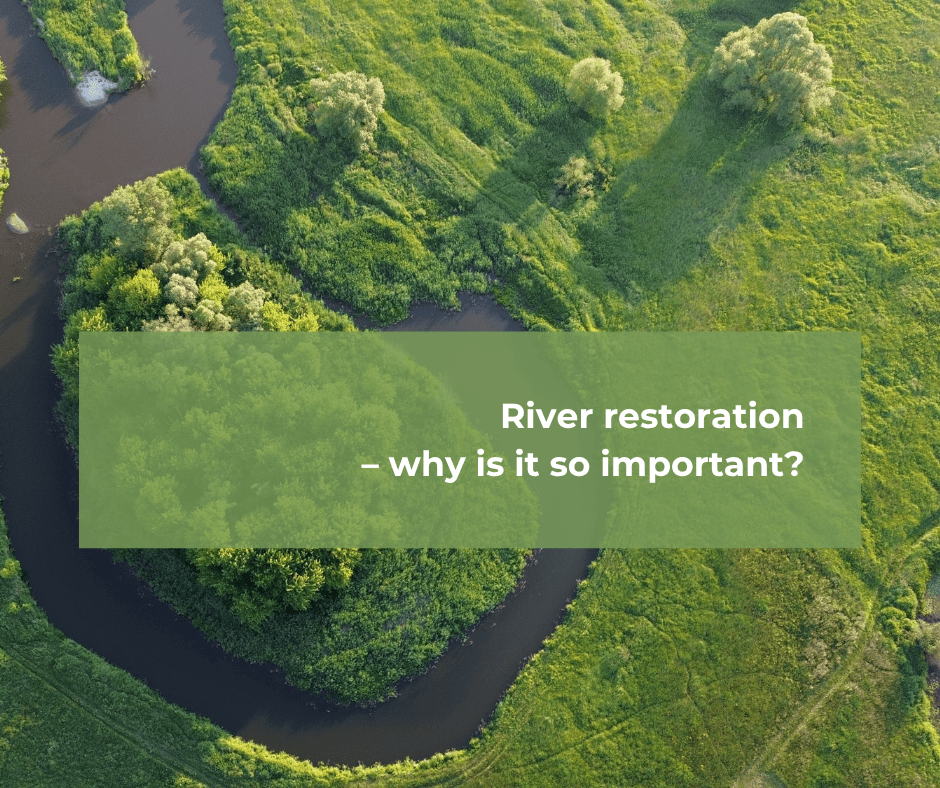

Renaturalization is the process of restoring rivers and their valleys to their natural state, both hydrologically (i.e., water flow and retention) and ecologically (biodiversity). In practice, this means, among other things:
- restoring natural riverbeds
- removing or modifying barriers (weirs, rapids)
- revitalizing oxbow lakes, floodplains, and wetlands
- increasing rainwater and groundwater retention
Restoring Ecological Continuity
In the past, the Nida River was transformed in many places by humans – through regulation, land improvement, and the construction of embankments and dams. This resulted in the loss of ecological corridors – fish and other organisms could not migrate freely, reproduction was hampered, and populations became fragmented.
Renaturalization unblocks these connections, enabling:
- the migration of species (e.g., migratory fish like vimba)
- the flow of energy and matter within the ecosystem
- increased population stability and resilience
Increasing Water Retention
In its natural state, the river not only flows but also floods nearby meadows, forests, and oxbow lakes, creating rich wetland environments. As a result of transformations, Nida has lost much of its water-storage capacity.
Thanks to renaturalization:
- water remains in the landscape longer, replenishing groundwater
- the risk of flooding is reduced (because water spills into safe areas)
- the effects of drought are mitigated (water for plants and agriculture is available longer)
Biodiversity Protection
The Nida Valley is an area of high natural value – part of its catchment area is included in the Natura 2000 network. However, without renaturalization, many habitats have been degraded or have ceased to function.
Renaturalization enables:
- the restoration of habitats for birds, amphibians, fish, and invertebrates
- the return of valuable species (e.g., otters, beavers, and great crested newts)
- the preservation and improvement of meadow and wetland habitats
Restoring the River’s Natural Dynamics
In its natural state, the river meanders, creating bends, sandbars, islands, and oxbow lakes. This dynamics creates a mosaic of habitats essential for many species. The transformed river becomes a monotonous and biologically poor canal.
Thanks to project activities:
- the Nida River is regaining its dynamic, changing character
- vegetation and animals can benefit from diverse microhabitats
- nature is becoming more resilient to climate change
Benefits for People and Local Communities
Renaturalization is not just about “nature” – it also provides real support for people:
- it increases hydrological safety (against floods and droughts)
- improves quality of life thanks to a cleaner environment and landscape values
- supports the development of sustainable tourism (e.g., kayaking, nature education)
- strengthens local identity and attachment to the region
The renaturalization of the Nida River is a strategic investment in the future – both from the perspective of nature conservation and adaptation to climate change. This initiative combines environmental protection with improving the quality of life for local residents and is an example of modern, integrated water management in Poland.
The project is financed by European Funds for Eastern Poland 2021–2027.
