

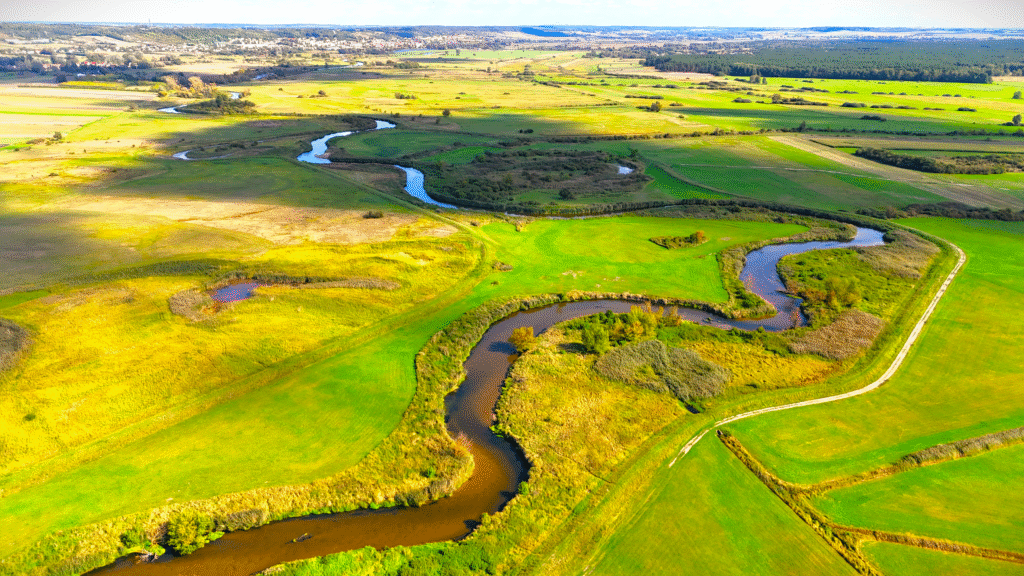

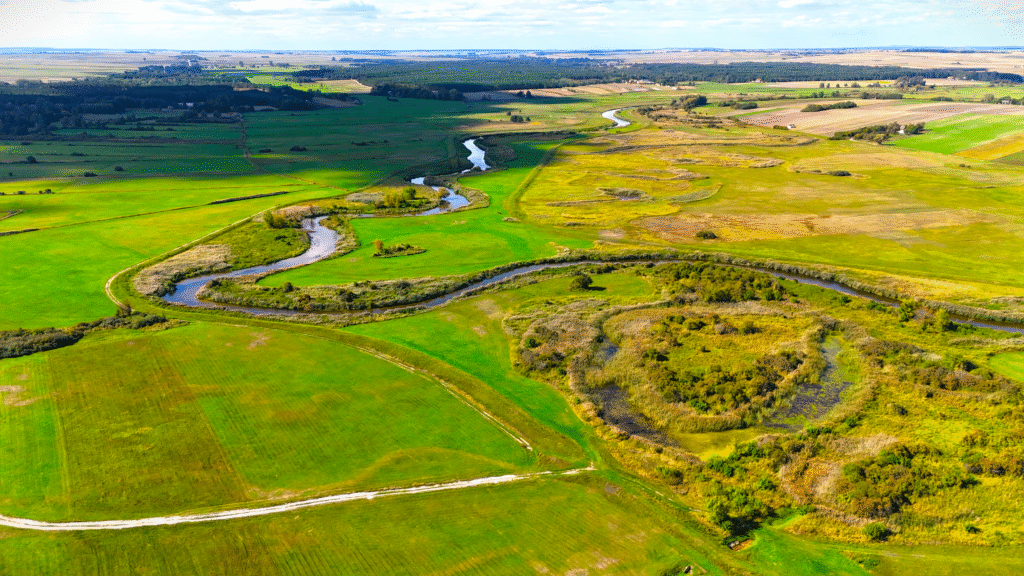
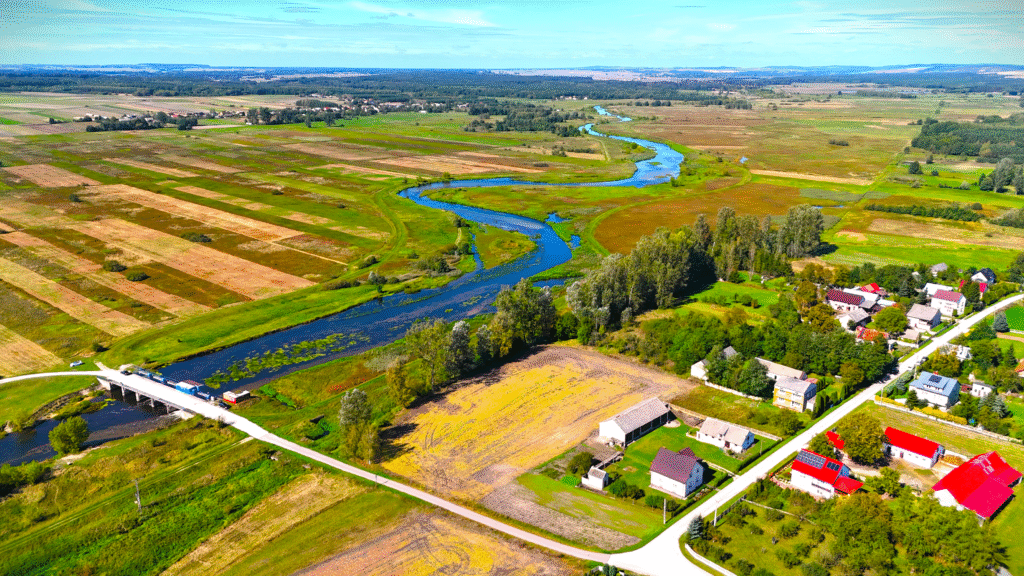
The Nida River Valley is one of the most valuable natural areas in southern Poland, distinguished by its abundance of aquatic, wetland, and riverside habitats. For centuries, the river has shaped the local landscape, providing natural water retention, fostering the growth of diverse plant and animal species, and supporting human activity. However, in recent decades, intensive hydraulic engineering and land improvement projects have significantly disrupted the natural functioning of the river and its valley.
The response to these challenges is the project “Restoring Biodiversity in the Nida River Valley by Rebuilding Ecological Corridors and Increasing Soil Retention,” implemented under the name “the Natural Nida.” This comprehensive undertaking aims to restore the river’s natural role in the landscape and restore the natural processes crucial to the functioning of the entire river valley.
The goal of the Natural Nida Project is to restore the ecological continuity of the Nida River and its tributaries, improve habitat conditions for aquatic organisms and species dependent on wet environments, and increase natural water retention in the river valley. These activities are consistent with a modern approach to water management, based on natural processes and nature-based solutions, which are increasingly replacing traditional, technical methods of river regulation.
Why Does the Nida River Valley Need Renaturalization?
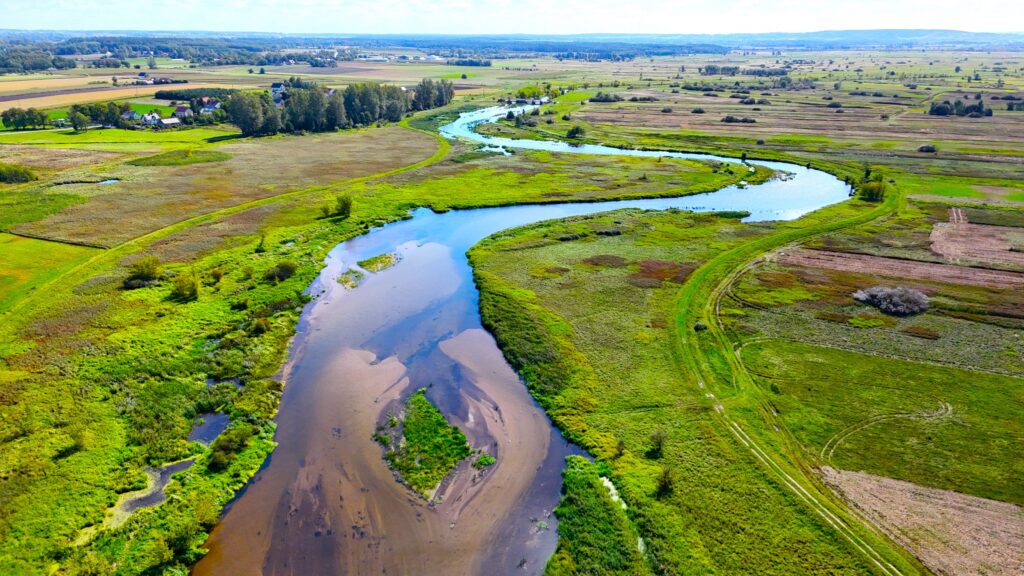
In the 20th century, the Nida River was subjected to numerous regulations. The construction of weirs, embankments, and extensive drainage systems led to accelerated water runoff, reduced valley retention, and disrupted natural migration corridors. These actions resulted in habitat degradation, a decline in biodiversity, and a deterioration of hydrological conditions throughout the entire catchment area.
Disruption of natural river processes has also increased hydrological threats. Rapid runoff of rainwater favors the occurrence of flash floods and localized flooding, while simultaneously limiting the landscape’s ability to retain water for use during dry periods. As a result, the region is experiencing both drought and flooding, which are becoming increasingly frequent due to ongoing climate change.
The Natural Nida Project aims to reverse these processes by gradually restoring the river to its natural state. Restoring oxbow lakes, clearing migration barriers, and renaturalizing floodplains are actions that will allow water to remain in the landscape longer while creating stable and diverse habitats for flora and fauna.
Comprehensive Operations Along the Entire River Section
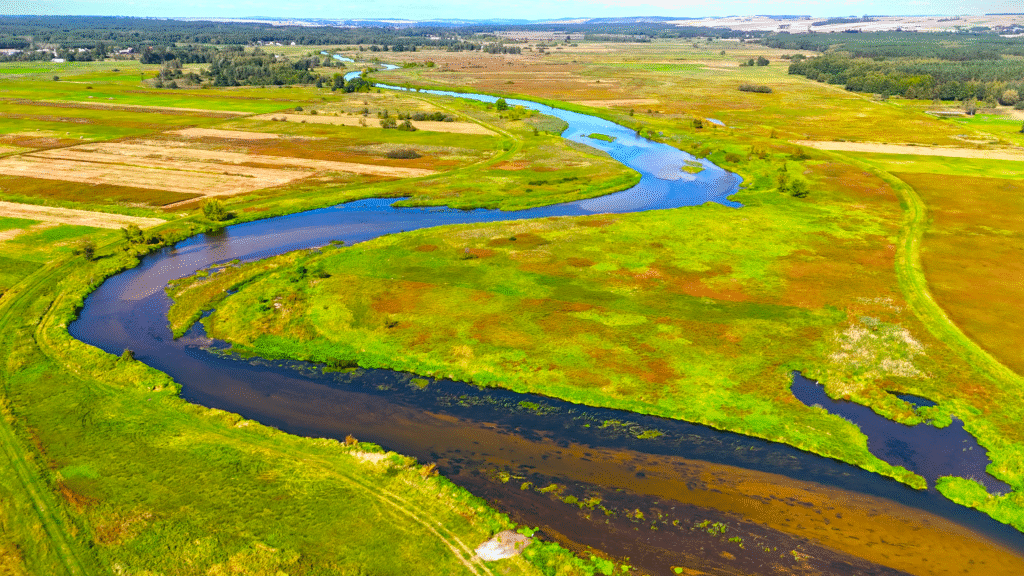
The project will be implemented along a 39-kilometer section of the Nida River Valley, between Brzeźno and Pińczów. It encompasses six complementary investment projects that together form a coherent concept for the renaturalization of the river valley and the restoration of its ecological functions.
In Umianowice, activities will be carried out to increase surface and subsurface retention, including through the reconstruction of drainage ditches, water level stabilization, and the installation of measurement devices to monitor hydrological conditions. Migration barriers will be removed on the Nida River, its tributary, the Brzeźnica River, and the Mierzawa River. In their place, fish passes and rock rapids will be constructed, allowing for the free migration of fish and other aquatic organisms, restoring the continuity of ecological corridors.
Another important element of the project is the revitalization of oxbow lakes, both in Brzeźno and in the Pińczów area. Restoring connections between oxbow lakes and the main river will improve water quality, promote the growth of aquatic and marsh vegetation, and increase habitat diversity. Restoration of the inland Nida delta, including the removal of flood embankments and the restoration of floodplains, will allow the river to once again utilize the natural space of its valley.
Benefits for Nature and People
The Natural Nida Project combines environmental goals with the needs of local communities. Increasing valley retention will contribute to stabilizing the hydrological regime, reducing the effects of flash floods and reducing flood risk. At the same time, increased water retention in the landscape will mitigate the effects of droughts, which is important for both agriculture and water-dependent ecosystems.
Renaturalization of the Nida River Valley will also enhance the region’s scenic and recreational values. Restored oxbow lakes, natural banks, and floodplains will foster the development of nature tourism, outdoor education, and recreation, while strengthening a local identity based on closeness to nature.
The project will demonstrate that nature conservation and rational water management can go hand in hand with local development. “Natural Nida” is an example of an investment that not only focuses on restoring the river’s natural functions but also on strengthening the region’s resilience to the effects of climate change, droughts, and floods.
Investing in the Future of the Nida River Valley
The Natural Nida Project will be implemented thanks to support from European Funds for Eastern Poland 2021-2027. This is a long-term investment in water security, biodiversity, and the sustainable development of the Nida River Valley – benefiting current and future generations.
