

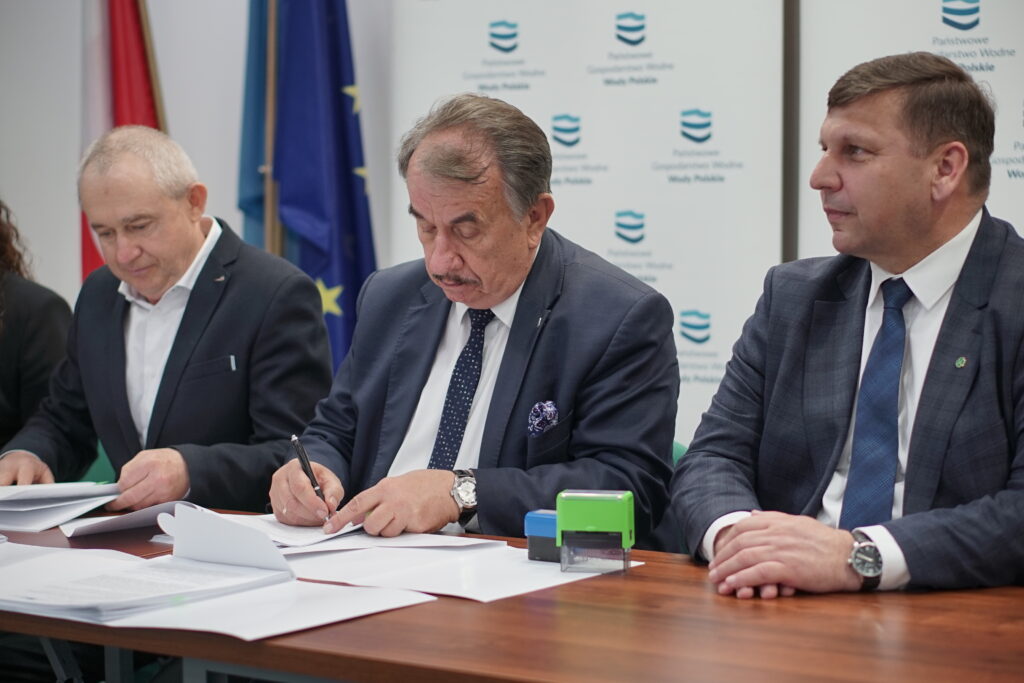

Polish Waters in Kraków has signed a contract for construction work as part of the “Natural Nida” project. Work will begin on tasks involving the restoration of the ecological corridor between the Nida and Mierzawa rivers and the revitalization of the Pińczów Reservoir and the Nida River’s oxbow lakes.
Restoring the ecological corridor between the Nida and Mierzawa rivers will involve clearing migration barriers for aquatic organisms, enabling two-way migration through existing hydrotechnical facilities, using nature-friendly solutions.
As part of the project on the Nida River, work will be carried out on eight structures that constitute migration barriers for aquatic organisms through their reconstruction/demolition and the construction of various forms of fish passes. On the Mierzawa River, construction work will include work on four migration barriers.
The revitalization of the Pińczów Reservoir and the oxbow lakes of the Nida River will involve drainage and repair work, resulting in the revitalization of the Pińczów Reservoir and the oxbow lakes of the Nida River near the town of Pińczów.
The implementation of all planned activities will allow for the restoration of natural processes in the Nida River Valley.
The project will bring numerous environmental benefits, such as improved water quality, increased biodiversity, strengthened fish populations, and the development of habitats for many protected species. At the same time, the investment will positively impact residents’ safety by reducing flood risk and enhancing the tourist appeal of the Nida Valley for those who value contact with nature. It will also contribute to reducing the effects of drought by restoring natural floodplains, increasing the valley’s retention capacity, and activating oxbow lakes, which will allow for water retention in the landscape.
Why Does the Nida Valley Need Renaturalization?
In the 20th century, the Nida River was subjected to numerous regulations. The construction of weirs, embankments, and extensive drainage systems led to accelerated water runoff, reduced valley retention, and disrupted natural migration corridors. These activities resulted in habitat degradation, a decline in biodiversity, and a deterioration of the hydrological conditions of the entire catchment area.
The disruption of natural river processes has also increased hydrological hazards. Rapid stormwater runoff favors the occurrence of flash floods and local flooding, while simultaneously limiting the landscape’s ability to retain water for use during dry periods. As a result, the region experiences the effects of both droughts and floods, which are becoming increasingly frequent due to ongoing climate change.
The “Natural Nida” project aims to reverse these processes by gradually restoring the river to its natural state. Restoring oxbow lakes, clearing migration barriers, and renaturalizing floodplains are actions that will allow water to remain in the landscape longer while creating stable and diverse habitats for flora and fauna.
The project “Restoring the biodiversity of the Nida Valley by rebuilding ecological corridors and increasing soil retention” is implemented by the State Water Holding Polish Waters, financed by the European Funds for Eastern Poland 2021-2027.
